
What is WorldCrafter?
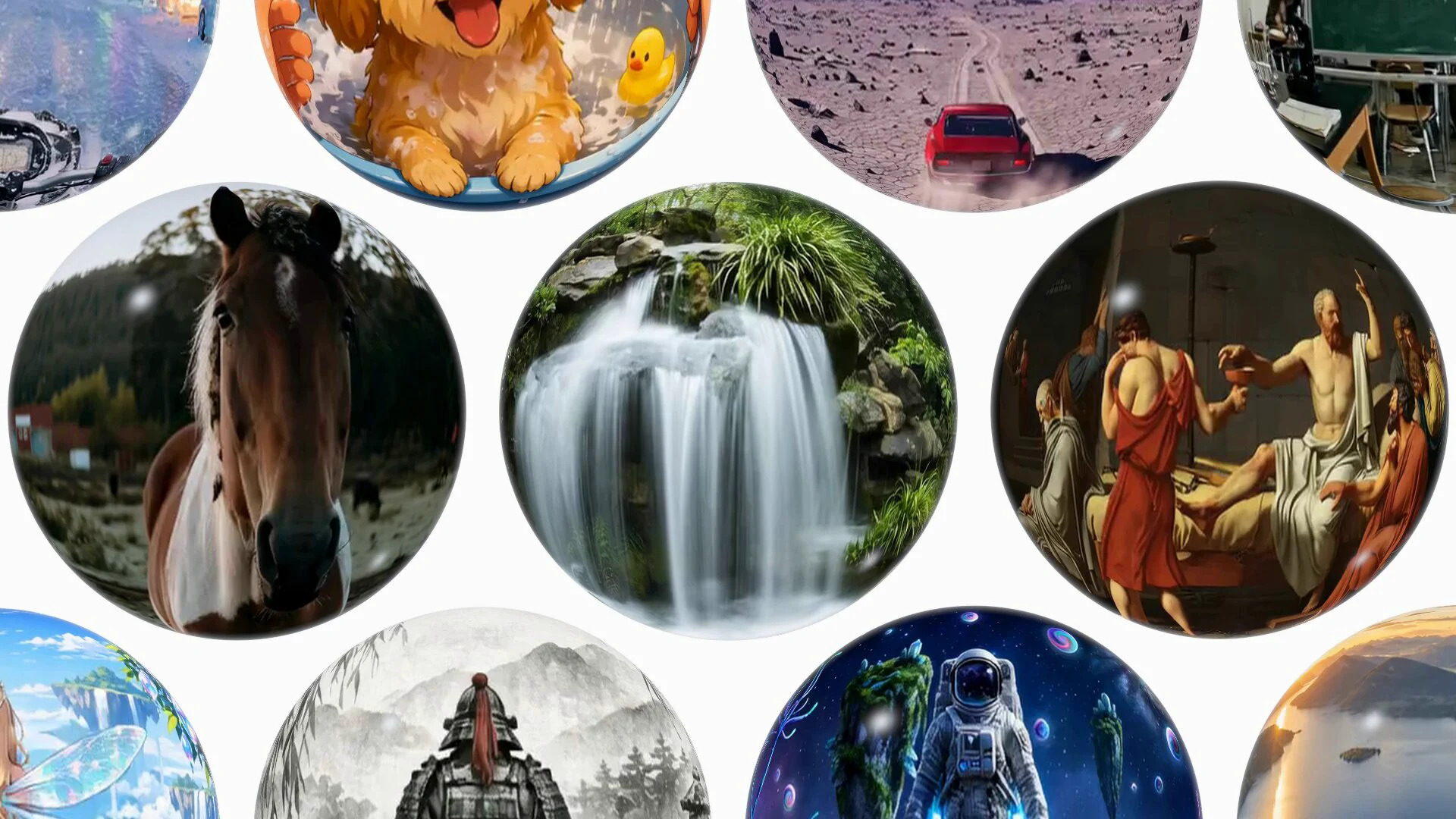
WorldCrafter is a research world model from Tencent's ARC Lab and Peking University, published in September 2026. Starting from a single image or a text prompt, it generates a world you explore by moving the camera, and it is designed so that places you have already seen come back the way you left them — the problem most video world models fail at once you turn around.
A memory the camera can ask questions of
Instead of pushing every past frame into the generator, which quickly overflows its limited context, WorldCrafter keeps a compact memory of earlier views. A memory encoder, initialised from pretrained 3D representation models, compresses those views; a readout module keyed to the requested camera pose then pulls out only what matters for the shot being generated. In other words, the viewpoint decides which part of the past reaches the generator.
There are no explicit depth maps or geometric warping: the memory is learned together with the video model, while recent frames handle ongoing motion. It works for dynamic scenes as well as static ones.
Speed and hardware
A few-step distilled “WorldCrafter-fast” version reaches 16 FPS for streaming exploration, but on a four-GPU machine. That puts it firmly in cloud and research territory rather than on a home PC. In the paper it holds long-horizon consistency and camera accuracy clearly better than baselines over minute-scale exploration.
Limits
WorldCrafter remembers geometry and appearance — where things are and what they look like — not facts and states such as who is holding what or what just happened. Control is camera-driven, so it is built for exploring a scene rather than directing characters. Check the repository licence before any commercial use.
Strengths and limitations
Strengths
- Strong spatial memory when revisiting places
- Accurate camera control
- Works from a single image or a text prompt
- Code available on GitHub
Limitations
- Needs four GPUs for 16 FPS
- Camera-only control, little character direction
- Memory covers places, not events
- Research release; check licence for commercial use
Who is WorldCrafter for?
Researchers and developers studying spatial memory and scene consistency in world models.
Frequently asked questions
What makes WorldCrafter different from other world models?
Its memory is queried by camera pose: the viewpoint you request decides which past observations reach the generator, so revisited places stay consistent.
Can WorldCrafter run on an RTX 4090?
Not in real time. The published 16 FPS figure uses a four-GPU machine; a single consumer card would be far slower, if it fits at all.
Is WorldCrafter open source?
Code is published on GitHub and there is a community demo on Hugging Face. Check the repository licence before commercial use.
Who made WorldCrafter?
Tencent ARC Lab together with Peking University.