
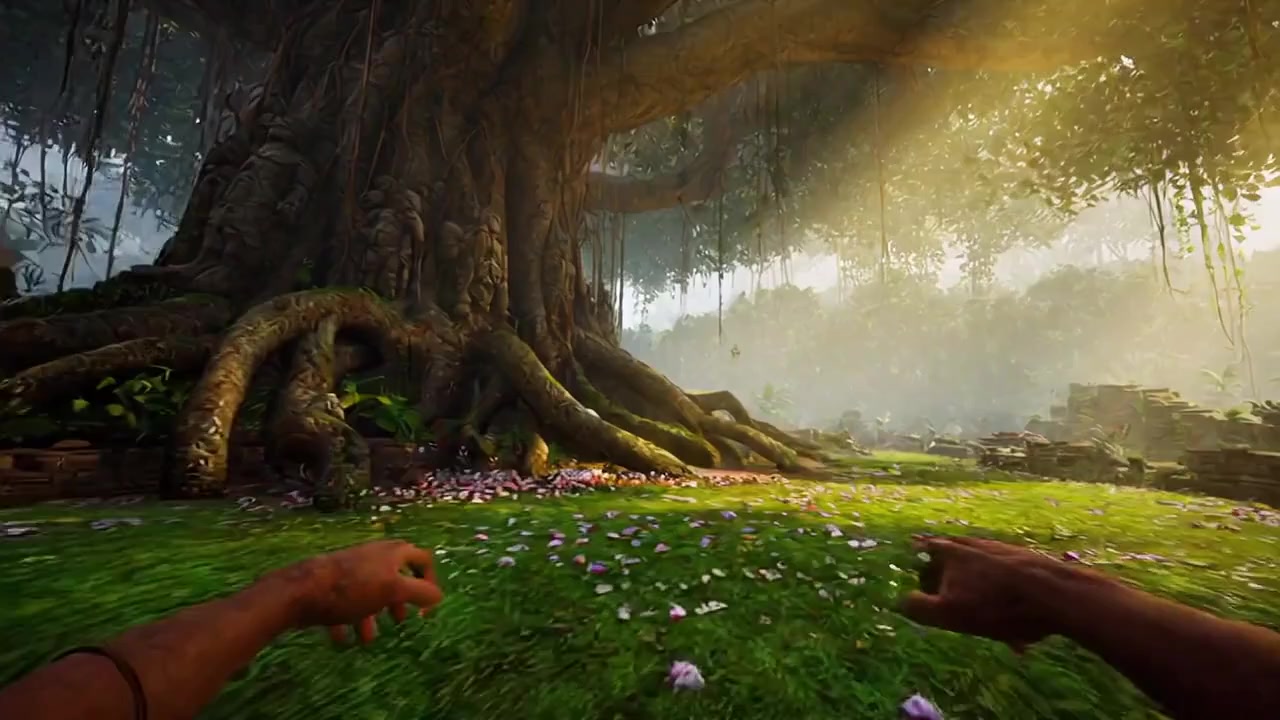
Imagine typing "show me ancient Rome" and instantly stepping into the Colosseum as it looked 2,000 years ago. Or describing a fantasy landscape and exploring it in first person within seconds. This isn't science fiction—it's the promise of AI world models, one of the most revolutionary developments in artificial intelligence today.
But what exactly are AI world models, and why are tech giants like Google, Microsoft, and leading AI researchers betting that they're crucial to the future of computing?
What Are AI World Models?
An AI world model is an artificial intelligence system that can generate, simulate, and predict interactive 3D environments in real-time. Think of it as an AI that understands how the physical world works—how objects move, how gravity affects things, how light behaves, how spaces are connected—and can create virtual worlds that follow these rules.
The Holodeck Comparison
If you're familiar with Star Trek, AI world models are the real-world equivalent of the Holodeck—a virtual environment you can step into, explore, and interact with, all generated by AI rather than manually created by human developers.
Unlike traditional video games or 3D environments that require months of manual creation by artists and programmers, AI world models can generate entire explorable worlds from simple inputs like:
- Text descriptions: "A medieval castle on a cliff overlooking the ocean at sunset"
- Images: A single photo that the AI extrapolates into a full 3D environment
- Videos: Footage that the AI learns from and recreates as interactive space
- Sketches: Rough layouts that AI fills with realistic detail
How Do AI World Models Work?
At their core, AI world models operate similarly to language models like ChatGPT, but instead of predicting the next word in a sentence, they predict the next frame in a video or the next state of a 3D environment.
The Technical Foundation
Modern AI world models use sophisticated neural networks trained on massive datasets of videos, images, and 3D environments. They learn patterns like:
- How objects interact (a ball bouncing, water flowing)
- Spatial relationships (rooms connect logically, walls have consistent heights)
- Physical laws (gravity, lighting, shadows)
- Temporal consistency (objects stay where you left them)
When you interact with an AI world model—moving forward, turning around, or requesting changes—the AI predicts what you should see next based on everything it's learned about how the real world behaves.
Key Innovation
Unlike traditional game engines where physics and rendering are programmed explicitly, AI world models learn these behaviors from data. This allows them to generate diverse, realistic environments without needing every rule to be manually coded.
Why Are AI World Models Extremely Important?
AI world models represent a paradigm shift in how we create, interact with, and experience digital content. Their importance extends far beyond gaming and entertainment:
1. Revolutionary Accessibility for People with Disabilities
Empowering Mobility-Impaired Individuals
For people who are paralyzed, wheelchair-bound, or otherwise unable to move freely, AI world models offer something profoundly valuable: the ability to experience places and activities they physically cannot access.
Imagine someone who has never been able to walk exploring the Grand Canyon, hiking through a rainforest, or swimming in the ocean—all through immersive, first-person AI-generated experiences. These aren't passive videos; they're interactive environments where users control their perspective and movement, creating a sense of agency and presence.
Applications for accessibility:
- Virtual travel: Explore world landmarks, natural wonders, or cultural sites
- Mobility simulation: Experience activities like skiing, dancing, or rock climbing
- Social spaces: Attend virtual events, museums, or gatherings in explorable environments
- Therapeutic experiences: Nature therapy, exposure therapy, and rehabilitation exercises
- Education: Hands-on learning experiences in historical events, scientific phenomena, or distant locations
2. Training AI Agents and Robots
Unlimited Training Environments
AI world models can generate infinite simulated environments for training robots and AI agents, dramatically accelerating development while reducing costs and risks.
Training autonomous vehicles, humanoid robots, or AI assistants in the real world is expensive, dangerous, and slow. AI world models solve this by creating realistic simulations where agents can learn from millions of scenarios that would take years or be impossible to encounter in reality.
Example use cases:
- Autonomous vehicles practicing edge cases (icy roads, sudden obstacles)
- Warehouse robots learning to navigate complex layouts
- Surgical robots practicing delicate procedures
- Rescue drones exploring disaster scenarios
3. Revolutionizing Content Creation
From Idea to Experience in Seconds
Creating a video game level traditionally takes weeks or months. With AI world models, creators can generate, test, and iterate in minutes.
Industries being transformed:
- Gaming: Procedurally generated worlds, user-created content, rapid prototyping
- Film & VFX: Virtual sets, location scouting, pre-visualization
- Architecture: Instant 3D walkthroughs of designs
- Education: Interactive historical reconstructions, science simulations
- Marketing: Product demonstrations, virtual showrooms
4. A Step Toward Artificial General Intelligence (AGI)
Many researchers believe AI world models are crucial for developing AGI—AI systems with human-level intelligence across domains. Why?
- Spatial reasoning: Understanding 3D space is fundamental to human intelligence
- Physics understanding: Knowing how the world works enables better planning and problem-solving
- Embodied learning: AGI may require systems that can perceive and act in environments
- Common sense: World models learn intuitive physics that mirrors human understanding
The AGI Connection
Google DeepMind explicitly states that world models are "a key stepping stone on the path to AGI." By teaching AI to understand and simulate the physical world, we move closer to systems that can reason about reality like humans do.
5. Democratizing Virtual Experiences
AI world models lower the barrier to creating immersive experiences. You no longer need:
- Teams of 3D artists and programmers
- Expensive game engines and software
- Months of production time
- Technical expertise in 3D modeling
This democratization means more diverse voices can create virtual experiences, from educators building custom learning environments to individuals creating memories of places that hold personal significance.
Real-World Impact: Who Benefits Today?
While AI world models are still emerging, they're already providing value to:
People with Disabilities
Experiencing mobility, exploring places they can't physically visit, participating in activities they're unable to do in the physical world.
Educators and Students
Creating immersive historical reconstructions, scientific simulations, and interactive learning experiences that would be impossible in traditional classrooms.
Autonomous Vehicle Researchers
Generating millions of driving scenarios to train and test self-driving systems safely.
Game Developers
Rapidly prototyping game worlds, generating infinite content variations, and enabling player-created experiences.
Healthcare Professionals
Creating therapeutic virtual environments for rehabilitation, exposure therapy, pain management, and mental health treatment.
Current Limitations and The Road Ahead
AI world models are powerful but still in early stages. Current limitations include:
- Consistency issues: Objects may change or disappear, especially over extended sessions
- Visual artifacts: Occasional blurriness, distortions, or unrealistic rendering
- Limited interactivity: Most models offer basic navigation; complex object manipulation is still developing
- Compute requirements: Real-time generation demands significant processing power
- Short memory: Many models maintain consistency for only minutes, not hours
Important Note
These are early-stage technologies. While impressive, they're not yet at the level of polished consumer products. Expect rapid improvement over the coming months and years.
However, progress is accelerating rapidly. Within the next 2-3 years, we'll likely see:
- Photorealistic quality rivaling AAA games
- Hours of consistent world state
- Complex multi-agent interactions and multiplayer
- Seamless integration with VR/AR headsets
- Widespread accessibility as compute costs decrease
The Bottom Line
AI world models represent more than just a technological achievement—they're a gateway to new forms of human experience. For people who can't move freely, they offer virtual mobility. For researchers, they provide unlimited training grounds. For creators, they unlock rapid experimentation. For all of us, they're a step toward a future where the digital and physical worlds blend seamlessly.
As these technologies mature, they'll become as fundamental to our digital lives as web browsers or smartphones. The question isn't whether AI world models will transform how we interact with computers—it's how quickly we'll adapt to this new reality.
Experience It Yourself
The best way to understand AI world models is to try them. World Simulator AI offers interactive experiences powered by our own AI video model, where your choices shape AI-generated stories in first person.
The future of virtual worlds is being written right now—and it's more accessible, immersive, and transformative than ever before.